7/25/2009

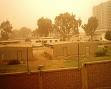
Khamsin wind

[ . BACK to TOP . ]

:::::::::::::::::::::::::::::::::::::::::::::::::::::::::::::::::::::::::::::::::::::::::::::::::::::

Khamsin wind

***** Location: Egypt
***** Season: Topic
***** Category: Heaven


*****************************
Explanation

The Khamsin will be familiar to anyone who has spent time in Egypt or the neighbouring countries. The name means 'fifty' for the number of days it supposedly blows, and is actually an abbreviation for 'rih al-khamsin' (the wind of fifty (days)).

for fifty days
all nature lying low—
the khamsin wind


The Khamsin is signalled by a dramatic rise in temperature and is anecdotally associated with a general shortening of tempers. Indeed, under Ottoman law, the presence of the khamsin was considered a mitigating factor in murder trials.

awaiting the khamsin
to do her in:
the nagging wife


Norman Darlington
Kigo Hotline, July 2009


CLICK for more photos


:::::::::::::::::::::::::::::::::::::::::::::::::::::::::::::::::::::::::::::::::::::::::::::::::::::

quote
Khamsin, khamseen, chamsin or hamsin (Egyptian Arabic: khamsīn, "fifty"), also known as khamaseen (Egyptian Arabic: khamāsīn, "fifties") refers to a dry, hot and dusty local wind blowing in North Africa and the Arabian Peninsula. Similar winds in the area are sirocco and simoom.

Khamsin can be triggered by depressions that move eastwards along the southern parts of the Mediterranean or along the North African coast from February to June.

In Egypt, khamsin usually arrives in April but occasionally occur in March and May, carrying great quantities of sand and dust from the deserts, with a speed up to 140 kilometers per hour, and a rise of temperatures as much as 20°C in two hours.It is believed to blow "at intervals for about 50 days",although it rarely occurs "more than once a week and last for just a few hours at a time."

An 19th-century account of khamsin in Egypt goes:
These winds, though they seldom cause the thermometer of Fahrenheit to rise above 95° in Lower Egypt, or in Upper Egypt 105°, are dreadfully oppressive, even to the natives. When the plague visits Egypt, it is generally in the spring; and the disease is most severe in the period of the khamáseen.

The same account relates that Muslims in Egypt "calculate the period of khamáseen ... to commence on the day immediately following the Coptic festival of Easter Sunday, and to terminate on the Day of Pentecost (or Whitsunday); and interval of forty-nine days."

During Napoleon's Egyptian Campaign, the French soldiers had a hard time with khamsin: when the storm appeared "as a blood-stint in the distant sky", the natives went to take cover, while the French "did not react until it was too late, then choked and fainted in the blinding, suffocating walls of dust." During the North African Campaign of the World War II, "allied and German troops were several times forced to halt in mid-battle because of sandstorms caused by khamsin ... Grains of sand whirled by the wind blinded the soldiers and created electrical disturbances that rendered compasses useless."
© More in the WIKIPEDIA !


*****************************
Worldwide use


*****************************
Things found on the way


*****************************
HAIKU


khamseen -
echo of
deserted Ra


Camilla Sayf, khamseen winds

:::::::::::::::::::::::::::::::::::::::::::::::::::::::::::::::::::::::::::::::::::::::::::::::::::::


*****************************
Related words

***** WIND in various kigo


:::::::::::::::::::::::::::::::::::::::::::::::::::::::::::::::::::::::::::::::::::::::::::::::::::::

BACK to the TOP of this BLOG

BACK to the Worldkigo ABC Index

:::::::::::::::::::::::::::::::::::::::::::::::::::::::::::::::::::::::::::::::::::::::::::::::::::::

7/16/2009

Sesbania Tree

[ . BACK to TOP . ]
:::::::::::::::::::::::::::::::::::::::::::::::::::::::::::::::::::::::::::::::::::::::::::::::::::::

Sesbania Tree

***** Location: Kenya
***** Season: Topic
***** Category: Plant


*****************************
Explanation

Sesbania Tree
Sesbania sesban (L.) Merr.

CLICK For more photos

Common names
Egyptian pea; jayanti, janti, puri (Indonesia); katuray, katodai (Philippines); yay-tha-kyee, yethugyi (Myanmar); snao kook (Cambodia); sapao lom (Laos); sami, saphaolom (Thailand); dien-dien (Vietnam).

Shrub or short-lived tree up to 8 m tall. Stem up to 12 cm in diameter, usually pubescent, sometimes becoming glabrous. Leaves, including a short petiole, 2-18 cm long, pinnately compound; leaflets in 6-27 pairs, linear, oblong, up to 26 mm x 5 mm, glabrous or almost so above, sometimes pubescent beneath, often pilose at the margins; stipules narrowly triangular, up to 7 mm long, pubescent.

Uses/applications
S. sesban has a long history of use in India, primarily as a green manure and a source of cut and carry forage. Planted, or assisted to establish as a volunteer, as an improved fallow in maize fields in southern and east Africa because it improves crop yields and provides fuelwood. Can be intercropped with corn, beans, cotton and many other field crops. Harvested leaves make a rich compost. Its leaves are a good source of protein for cattle and sheep. Used as a grazed forage in sub-tropical Australia and Kenya. Has been used as a reclamation species of saline spoils in southern China.
It produces a light fuelwood suitable for cooking and charcoal production.
It has been used as a live support for black pepper, grapes, cucurbits and betel vine and as a shade tree for coffee and turmeric.

In Western Kenya, farmers allow it to grow in their maize fields because it improves crop yields and provides fuelwood.

It is used in the cuisine of Vietnam.

source : www.tropicalforages.info

:::::::::::::::::::::::::::::::::::::::::::::::::::::::::::::::::::::::::::::::::::::::::::::::::::::


sesbania pods

sesbania pods
slowly turning brown--
cloudy sky


Partrick Wafula


*****************************
Worldwide use


*****************************
Things found on the way


*****************************
HAIKU


cold breezy morning ...
sesbanias gently swing
from side to side

dew gleaming
on sesbania leaves--
a dove coos


Patrick Wafula, Kenya


:::::::::::::::::::::::::::::::::::::::::::::::::::::::::::::::::::::::::::::::::::::::::::::::::::::

from the Bamboochas, March 2010


evening breeze --
a butterfly flying around
a sesbania tree


Stephen Macharia


breezy evening --
a bird rests on a swinging
sesbania tree


Eric Mwange


*****************************
Related words

***** WKD : Trees and Haiku


:::::::::::::::::::::::::::::::::::::::::::::::::::::::::::::::::::::::::::::::::::::::::::::::::::::

BACK to the TOP of this BLOG

BACK to the Worldkigo ABC Index

:::::::::::::::::::::::::::::::::::::::::::::::::::::::::::::::::::::::::::::::::::::::::::::::::::::

7/11/2009

Weaver bird

[ . BACK to Worldkigo TOP . ]
:::::::::::::::::::::::::::::::::::::::::::::::::::::::::::::::::::::::::::::::::::::::::::::::::::::

Weaver bird, weaverbird

***** Location: Kenya
***** Season: Topic
***** Category: Animal


*****************************
Explanation

The Ploceidae, or Weavers, are small passerine birds related to the finches.

These are seed-eating birds with rounded conical bills, most of which breed in sub-Saharan Africa, with fewer species in tropical Asia and also in Australia. The weaver group is divided into the buffalo, sparrow, typical, and widow weavers. The males of many species are brightly coloured, usually in red or yellow and black, some species show variation in colour only in the breeding season.

CLICK for more photos Weaver birds, also known as weaver finches, get their name because of their elaborately woven nests (the most elaborate of any birds'), though some are notable for their selective parasitic nesting habits. The nests vary in size, shape, material used, and construction techniques from species to species. Materials used for building nests include fine leaf-fibers, grass, and twigs. Many species weave very fine nests using thin strands of leaf fiber, though some, like the buffalo-weavers, form massive untidy stick nests in their colonies, which may have spherical woven nests within.
The sparrow weavers of Africa build apartment-house nests, in which 100 to 300 pairs have separate flask-shaped chambers entered by tubes at the bottom. Most species weave nests that have narrow entrances, facing downward.

The weavers are gregarious birds which often breed colonially. The birds build their nests together for protection, often several to a branch. Usually the male birds weave the nests and use them as a form of display to lure prospective females. The weaver bird colonies may be found close to water bodies.
© More in the WIKIPEDIA !

:::::::::::::::::::::::::::::::::::::::::::::::::::::::::::::::::::::::::::::::::::::::::::::::::::::


ngosos (a species of weaverbirds found in Eastern)

Reference : Weaver bird, Kenya
Weaaverbird, weaver birds


:::::::::::::::::::::::::::::::::::::::::::::::::::::::::::::::::::::::::::::::::::::::::::::::::::::


Photo © Isabelle Prondzynski

. Thorn Tree .

*****************************
Worldwide use


*****************************
Things found on the way


*****************************
HAIKU


July wind --
weaver birds swing back and forth
on a millet stalk


Raymond Otieno


the weaverbird
returns to its nest --
nightfall


Christopher Kavita


morning sunshine --
a weaver-bird sings
in a virgin land


Barrack Elungata


drrizzly afternoon --
a weaver bird seeks shelter
in the hedge


Jacintah Wanza


chilly evening --
weaver birds singing
melodious songs


Kyalo Onesmus


into its nest
a weaver bird slips to hide --
short rainfall


Kelvin Mukoselo


noisy weaverbirds
build their nests on acacia trees --
men bend on farm


Prerna Dharap


weaver bird`s song--
a dog sheltering under
a bamboo tree


Dorothy Minayo


whispering leaves--
two weaver birds mating
on the acacia tree

green grass--
weaver birds struggling
to build a nest


Peter Kilunda


hot afternoon--
a weaver bird struggling
to catch its prey


Stephen Macharia


weaver bird --
how it pecks at this cabbage leaf
stuck in the mud!


Alex Mwanabisi


Kenya Saijiki Forum


:::::::::::::::::::::::::::::::::::::::::::::::::::::::::::::::::::::::::::::::::::::::::::::::::::::


weavernest patrick

april rain...
the weaver builds a new nest
in the acacia tree


Photo and Haiku: Patrick Wafula


the weavers
repairing their old nests...
long rains


~Tevez

:::::::::::::::::::::::::::::::::::::::::::::::::::::::::::::::::::::::::::::::::::::::::::::::::::::


dawn chorus--
the rhythmic whistles
of a weaver bird


Kevin Asava
Shiki Monthly Kukai December 2010


:::::::::::::::::::::::::::::::::::::::::::::::::::::::::::::::::::::::::::::::::::::::::::::::::::::


sunset -- .
a baby weaver bird peeps
in an incomplete nest


Steven Macharia
April 2011


:::::::::::::::::::::::::::::::::::::::::::::::::::::::::::::::::::::::::::::::::::::::::::::::::::::


silent chapel --
chirping weaver birds
break the silence


Milkah Wanjiku (Bamboocha, F3)

First prize at
. Carlile Kukai, 11 June 2011 .


*****************************
Related words

***** Bird Saijiki


:::::::::::::::::::::::::::::::::::::::::::::::::::::::::::::::::::::::::::::::::::::::::::::::::::::

BACK to the TOP of this BLOG

BACK to the Worldkigo ABC Index

:::::::::::::::::::::::::::::::::::::::::::::::::::::::::::::::::::::::::::::::::::::::::::::::::::::

7/02/2009

Casuarina Tree

[ . BACK to TOP . ]

:::::::::::::::::::::::::::::::::::::::::::::::::::::::::::::::::::::::::::::::::::::::::::::::::::::

Casuarina Tree

***** Location: Kenya
***** Season: Topic
***** Category: Plant


*****************************
Explanation

The casuarina tree is a lovely coniferous tree most at home on the Indian Ocean coast of Kenya. It is plentiful on the island of Lamu.
In Nairobi, it exists and grows, but is not plentiful.

Isabelle Prondzynski


:::::::::::::::::::::::::::::::::::::::::::::::::::::::::::::::::::::::::::::::::::::::::::::::::::::


CLICK for more photos

Casuarina is a genus of 17 species in the family Casuarinaceae, native to Australasia, southeastern Asia, and islands of the western Pacific Ocean. It was once treated as the sole genus in the family, but has been split into three genera.

Commonly known as the she-oak, sheoak, ironwood, or beefwood, casuarinas are commonly grown in tropical and subtropical areas throughout the world.

C. cunninghamiana and C. equisetifolia grow in Kenya.

© More in the WIKIPEDIA !


*****************************
Worldwide use

India

Casuarina trees are found in India too. Some years ago, while going by road to the Sun Temple of Konark, on the coast of Orissa in Eastern India, I found them growing in plenty by the coast. They presented a pleasant sight waving at the passers-by.

sunil uniyal, India

:::::::::::::::::::::::::::::::::::::::::::::::::::::::::::::::::::::::::::::::::::::::::::::::::::::


Casuarina trees are seen along coasts of Goa and on the east coast besides Orissa as Sunil mentions in Bengal's Digha beach as well. These trees grow on the coastal regions and create a wonderful sound throughout.
I have seen these trees on the coasts of Mananjeri in Madagaskar and Mauritus, too. These are very beautiful.

Kumarendra Mallick, Hyderabad, India


*****************************
Things found on the way


The Casuarina Tree
a collection of short stories set in 1920s Malaya
by W. Somerset Maugham
that came out of travels he paid for by working for the British Secret Service as a spy.
© More in the WIKIPEDIA !


*****************************
HAIKU


cold breezy evening ...
the casuarina trees whistling
in the wind


Patrick Wafula, Kenya


The leaves of this tree are called needles and they whistle when it is windy or heavily breezy.


:::::::::::::::::::::::::::::::::::::::::::::::::::::::::::::::::::::::::::::::::::::::::::::::::::::

quote
Visit Malaysia Year Haiku - Tanjung Rhu, Langkawi
(State of Kedah)

longing for another luminuous day
this evening tanjung rhu
the casuarina sighing throughout

the casuarina's tremulous sigh
tanjung rhu
every leaf sings the wistfulness in me


john tiong chunghoo
source : www.poemhunter.com


*****************************
Related words

***** Trees as haiku topics ... ... and kigo with trees


:::::::::::::::::::::::::::::::::::::::::::::::::::::::::::::::::::::::::::::::::::::::::::::::::::::

BACK to the TOP of this BLOG

BACK to the Worldkigo ABC Index

:::::::::::::::::::::::::::::::::::::::::::::::::::::::::::::::::::::::::::::::::::::::::::::::::::::

Kanga wrapping cloth

[ . BACK to Worldkigo TOP . ]
:::::::::::::::::::::::::::::::::::::::::::::::::::::::::::::::::::::::::::::::::::::::::::::::::::::

Kanga, kangas wrapping cloth, leso, lesso

***** Location: Kenya
***** Season: Topic
***** Category: Humanity


*****************************
Explanation

The colour orange is very popular in Kenyan textiles, particularly among the Kikuyus and Maasais. Traditional wraparound cloths, called kanga, often use yellow and orange patters in the ever changing designs.


There is a famous book called "100 uses for a kanga" -- and there are at least that many, probably many more!

Text and photo : Isabelle Prondzynski


. More photos of kanga .


Similar cloths are the kikoi and the kitenge.

. . . . .

The words lesso and kanga or khanga have now been officially accepted as English words, and now they can be found in the Oxford Advanced Learner's Dictionary 8th Edition page 819.
Patrick Wafula

:::::::::::::::::::::::::::::::::::::::::::::::::::::::::::::::::::::::::::::::::::::::::::::::::::::


quote
History of Kanga

Kangas originated on the coast of East Africa in the mid 19th century. As the story goes, some stylish ladies in Zanzibar got the idea of buying printed kerchiefs in lengths of six, from the bolt of cotton cloth from which kerchiefs were usually cut off and sold singly. They then cut the six into two lengths of three, and sewed these together along one side to make 3-by-2 sheet; or bought different kinds of kerchiefs and sewed them back together to form very individualistic designs.

The new design was called "leso" after the kerchief squares that had originally been brought to Africa by Portuguese traders. The leso quickly became popular than the other kind of patterned cloth available. Before long, enterprising coastal shopkeepers sent away for special designs, printed like the six-together leso pieces, but as a single unit of cloth.

These early designs probably had a border and a pattern of white spots on a dark background. The buyers (or more likely, their menfolk !) quickly came to call these cloths "KANGA" after the noisy, sociable guinea-fowl with its elegant spotty plumage.

Early this century, Swahili sayings were added to kangas. Supposedly this fashion was started by a locally famous trader in Mombasa, Kaderdina Hajee Essak, also known as "Abdulla". His many kanga designs, formerly distinguished by the mark "K.H.E. - Mali ya Abdulla", often included a proverb. At first, the sayings, aphorisms or slogans were printed in Arabic script, later in Roman letters. Many of them have the added charm (or frustration!) of being obscure or ambiguous in their meaning. If you find a motto that you can't figure out, ask several different Swahili speakers. You will get an equal number of different explanations! Some typical kanga sayings are listed on the following page, for your edification and enjoyment.

source : www.glcom.com/hassan / Swahili language and culture


CLICK for more photos CLICK for more photos


*****************************
Worldwide use


*****************************
Things found on the way


*****************************
HAIKU


cold July evening --
market women wrap kangas
round their necks

Patrick Wafula, Kenya, 2009


:::::::::::::::::::::::::::::::::::::::::::::::::::::::::::::::::::::::::::::::::::::::::::::::::::::


quick nap-
she burns her kanga
on a jiko


joseph nzilili
September 2010


:::::::::::::::::::::::::::::::::::::::::::::::::::::::::::::::::::::::::::::::::::::::::::::::::::::

Sunday afternoon-
she carries her child
in a leso


Sibiko Yamame


:::::::::::::::::::::::::::::::::::::::::::::::::::::::::::::::::::::::::::::::::::::::::::::::::::::


cold breeze-
mother covers her child
with a khanga


Mercy Amunze
June 2012


*****************************
Related words

*****


:::::::::::::::::::::::::::::::::::::::::::::::::::::::::::::::::::::::::::::::::::::::::::::::::::::

BACK to the TOP of this BLOG

BACK to the Worldkigo ABC Index

:::::::::::::::::::::::::::::::::::::::::::::::::::::::::::::::::::::::::::::::::::::::::::::::::::::