[ . BACK to WORLDKIGO TOP . ]
:::::::::::::::::::::::::::::::::::::::::::::::::::::::::::::::::::::::::::::::::::::::::::::::::::::
Hawkers for warm things
***** Location: Kenya
***** Season: Cool dry season
***** Category: Humanity
*****************************
Explanation
Hawkers and vendors of things to keep warm
glove vendor
hot coffee vendor
porridge vendor
scarf hawker
sweater hawker
More is here for now.
:::::::::::::::::::::::::::::::::::::::::::::::::::::::::::::::::::::::::::::::::::::::::::::::::::::
There are also hawkers and peddlers during the other seasons. Some which are there at any time will be seen as a topic for haiku.
*****************************
Worldwide use
*****************************
Things found on the way
*****************************
HAIKU
Jevanjee Garden—
thick sweater of today’s
preacher
cold night--
a coffee vendor jostle in
the bus stop
coffee thermos--
a customer touches it
before buying
cold bus stage—
the piling of the white
coffee cups
city hawker
the thick scarf layer
on his neck
. . . . .
referendum day--
a sweet peddler moves with
the voter's queue
. Referendum Day August 2010
Caleb Mutua
:::::::::::::::::::::::::::::::::::::::::::::::::::::::::::::::::::::::::::::::::::::::::::::::::::::
It is also worth mentioning the uji vendors.
(uji is a kind of porridge made from maize, not oats.)
Unlike the coffee vendors, these have been there for a long time. In this cold season, they seem to have increased. Most of the porridge vendors are women, and they carry the hot porridge in a 5 liter jerrycan, mostly yellow in colour. In hot and dry season, they peddle the porridge to construction workers and other workers in their respective work-places in the morning. In the evening, they do the same. Since the cold started, the vendors seem to have changed their pattern because I now
see them at any time of the day.
Porridge vendor—
he shakes and shakes till
the last spill
Caleb Mutua
:::::::::::::::::::::::::::::::::::::::::::::::::::::::::::::::::::::::::::::::::::::::::::::::::::::
linen shirt --
another hawker calls
as I pass
catcalls --
the hawkers melt for the
city askaris
Anthony Njoroge
askari ... Swahili word meaning "soldier"
*****************************
Related words
***** WKD : Reference
:::::::::::::::::::::::::::::::::::::::::::::::::::::::::::::::::::::::::::::::::::::::::::::::::::::
7/30/2010

7/27/2010
Mabati iron sheets
[ . BACK to WORLDKIGO TOP . ]
:::::::::::::::::::::::::::::::::::::::::::::::::::::::::::::::::::::::::::::::::::::::::::::::::::::
Mabati (Swahili, plural)
Corrugated iron sheets (English)
***** Location: Kenya
***** Season: Various, see below
***** Category: Humanity
*****************************
Explanation
The Swahili word "mabati" is one which every newcomer to Kenya learns within the first few days, as mabati are everywhere. They are the walls and roofs of houses, they are fencing, they are easily demolished, carried, and re-erected elsewhere. Even slum dwellers have mabati, which they may buy sheet by sheet, in order to build or extend their homes, to surround themselves with a protective wall, or to subdivide the interior of a house. Mabati are easy to erect (you just need some building timbers and suitable nails), and if they are used for housing, they keep off the rain, but magnify the heat or the cold -- and if the owner of the iron sheets moves, the mabati move along too.

Mabati fence
In the rural areas, they are fast replacing what remains of the traditional thatch. They have the advantage of being more easily available nowadays than the thatching grasses are, and they are clean enough to provide run-off drinking water, filling buckets, basins and tanks during the rains.
On the other hand, they have the disadvantage of poor heat insulation. City dwellers who stay in traditionally thatched houses for the first time, usually comment with pleasure about the very comfortable temperatures and the softer noise levels generated by the thatch.
The din of the mabati during heavy rains must be heard to be believed. During the hot dry season, on the other hand, they often emit tiny crackling sounds as they expand in the heat.
Video of mabati under pouring rain
Kenyans often use the English "iron sheet" as a translation of mabati -- this is not correct, as only corrugated iron sheets are normally mabati. Newcomers to Kenya usually switch to the Swahili word with great ease, as mabati are such an intrinsic part of modern day Kenya, whether urban or rural.
Mabati are usually left metallic and unpainted. Nowadays, painted mabati are also available in an array of colours, and they may be bent too, so as to form the roofs of bus shelters (e.g. the Country Bus Station in Nairobi) or markets (e.g. Muthurwa Market in Nairobi), where they project good modern design.

Old and new mabati used to build a slum house
~ Text and photos : Isabelle Prondzynski
:::::::::::::::::::::::::::::::::::::::::::::::::::::::::::::::::::::::::::::::::::::::::::::::::::::
The most common use of mabati is to construct housing in informal or slum areas. Mabati do not as such have any seasonality, but they provide a number of kigo for the dry and rainy seasons.
During the two rainy seasons, they rust and turn brown. Therefore, mabati rusting can be a rainy season kigo. Most importantly of all, mabati roofing is very useful during the rainy seasons for harvesting rainwater for domestic use.
During the hot dry season, the heat shimmers from the mabati roofs; this shimmering is quite visible, although it does not have any direct use or application to humans and animals. What I know is that the shimmering roofs are used to dry cereals such as maize, millet, etc, etc.
What I like most about mabati is that during the cold dry season dew collects on them and drips. This can be harnessed as water for domestic use in places where water is scarce, such as Ukambani.
~ Patrick Wafula
*****************************
Worldwide use
*****************************
Things found on the way
*****************************
HAIKU
sunrise --
light through the mabati
wakes me up
sleepless night --
water drops from the old
iron sheets
~Isaac Ndirangu
:::::::::::::::::::::::::::::::::::::::::::::::::::::::::::::::::::::::::::::::::::::::::::::::::::::
windy August night --
wet shoes on the mabati
roof rumble
World Cup --
they drum the mabati walls
celebrating Ghana
mabati roof...
gently pattering drizzle
in the blossoming dawn
sunny days --
the blue iron sheet's paint
peeling off
iron sheet roof --
the sound of raindrops
swallows our voices
~ Caleb Mutua
:::::::::::::::::::::::::::::::::::::::::::::::::::::::::::::::::::::::::::::::::::::::::::::::::::::
mabati sheets
play a lullaby rhythm --
soft rain
~ Elung'ata Barrack

A church built and roofed with mabati
:::::::::::::::::::::::::::::::::::::::::::::::::::::::::::::::::::::::::::::::::::::::::::::::::::::
evening downpour --
a row of basins below
the rusty iron sheets
~ Hussein Haji
cracking iron sheets
interrupt my study --
I take another shower
~ Anthony Njoroge
sunny afternoon --
iron sheets shine exposing
sun rays
~ Vivian Adhiambo
windy morning --
a noisy iron sheet swings
to the beat
~ Scholastica
leaking raindrops
from a rusty iron sheet --
rainy season
~ mwasia
reflection
from iron-sheet roofs --
sunny afternoon
~ Benard Nyerere
jua kali artisan
modelling an iron sheet --
a young jiko
~ Martin Kamau
early morning
rain drops fall heavily on
the iron sheets
~ Kelvin Mukoselo
:::::::::::::::::::::::::::::::::::::::::::::::::::::::::::::::::::::::::::::::::::::::::::::::::::::
cold drizzle
on our mabati roof --
grey morning
April rain --
the spattering on the
mabati roof
~ Patrick Wafula
:::::::::::::::::::::::::::::::::::::::::::::::::::::::::::::::::::::::::::::::::::::::::::::::::::::
first sun-
the cracking sound
of mabati
Otinga Andrew
January 2012
:::::::::::::::::::::::::::::::::::::::::::::::::::::::::::::::::::::::::::::::::::::::::::::::::::::
a bird shelters
under the iron sheet -
scorching sun
Jesca Auma
February 2012
*****************************
Related words
*****
[ . BACK to WORLDKIGO . TOP . ]
:::::::::::::::::::::::::::::::::::::::::::::::::::::::::::::::::::::::::::::::::::::::::::::::::::::
:::::::::::::::::::::::::::::::::::::::::::::::::::::::::::::::::::::::::::::::::::::::::::::::::::::
Mabati (Swahili, plural)
Corrugated iron sheets (English)
***** Location: Kenya
***** Season: Various, see below
***** Category: Humanity
*****************************
Explanation
The Swahili word "mabati" is one which every newcomer to Kenya learns within the first few days, as mabati are everywhere. They are the walls and roofs of houses, they are fencing, they are easily demolished, carried, and re-erected elsewhere. Even slum dwellers have mabati, which they may buy sheet by sheet, in order to build or extend their homes, to surround themselves with a protective wall, or to subdivide the interior of a house. Mabati are easy to erect (you just need some building timbers and suitable nails), and if they are used for housing, they keep off the rain, but magnify the heat or the cold -- and if the owner of the iron sheets moves, the mabati move along too.
Mabati fence
In the rural areas, they are fast replacing what remains of the traditional thatch. They have the advantage of being more easily available nowadays than the thatching grasses are, and they are clean enough to provide run-off drinking water, filling buckets, basins and tanks during the rains.
On the other hand, they have the disadvantage of poor heat insulation. City dwellers who stay in traditionally thatched houses for the first time, usually comment with pleasure about the very comfortable temperatures and the softer noise levels generated by the thatch.
The din of the mabati during heavy rains must be heard to be believed. During the hot dry season, on the other hand, they often emit tiny crackling sounds as they expand in the heat.
Video of mabati under pouring rain
Kenyans often use the English "iron sheet" as a translation of mabati -- this is not correct, as only corrugated iron sheets are normally mabati. Newcomers to Kenya usually switch to the Swahili word with great ease, as mabati are such an intrinsic part of modern day Kenya, whether urban or rural.
Mabati are usually left metallic and unpainted. Nowadays, painted mabati are also available in an array of colours, and they may be bent too, so as to form the roofs of bus shelters (e.g. the Country Bus Station in Nairobi) or markets (e.g. Muthurwa Market in Nairobi), where they project good modern design.
Old and new mabati used to build a slum house
~ Text and photos : Isabelle Prondzynski
:::::::::::::::::::::::::::::::::::::::::::::::::::::::::::::::::::::::::::::::::::::::::::::::::::::
The most common use of mabati is to construct housing in informal or slum areas. Mabati do not as such have any seasonality, but they provide a number of kigo for the dry and rainy seasons.
During the two rainy seasons, they rust and turn brown. Therefore, mabati rusting can be a rainy season kigo. Most importantly of all, mabati roofing is very useful during the rainy seasons for harvesting rainwater for domestic use.
During the hot dry season, the heat shimmers from the mabati roofs; this shimmering is quite visible, although it does not have any direct use or application to humans and animals. What I know is that the shimmering roofs are used to dry cereals such as maize, millet, etc, etc.
What I like most about mabati is that during the cold dry season dew collects on them and drips. This can be harnessed as water for domestic use in places where water is scarce, such as Ukambani.
~ Patrick Wafula
*****************************
Worldwide use
*****************************
Things found on the way
*****************************
HAIKU
sunrise --
light through the mabati
wakes me up
sleepless night --
water drops from the old
iron sheets
~Isaac Ndirangu
:::::::::::::::::::::::::::::::::::::::::::::::::::::::::::::::::::::::::::::::::::::::::::::::::::::
windy August night --
wet shoes on the mabati
roof rumble
World Cup --
they drum the mabati walls
celebrating Ghana
mabati roof...
gently pattering drizzle
in the blossoming dawn
sunny days --
the blue iron sheet's paint
peeling off
iron sheet roof --
the sound of raindrops
swallows our voices
~ Caleb Mutua
:::::::::::::::::::::::::::::::::::::::::::::::::::::::::::::::::::::::::::::::::::::::::::::::::::::
mabati sheets
play a lullaby rhythm --
soft rain
~ Elung'ata Barrack
A church built and roofed with mabati
:::::::::::::::::::::::::::::::::::::::::::::::::::::::::::::::::::::::::::::::::::::::::::::::::::::
evening downpour --
a row of basins below
the rusty iron sheets
~ Hussein Haji
cracking iron sheets
interrupt my study --
I take another shower
~ Anthony Njoroge
sunny afternoon --
iron sheets shine exposing
sun rays
~ Vivian Adhiambo
windy morning --
a noisy iron sheet swings
to the beat
~ Scholastica
leaking raindrops
from a rusty iron sheet --
rainy season
~ mwasia
reflection
from iron-sheet roofs --
sunny afternoon
~ Benard Nyerere
jua kali artisan
modelling an iron sheet --
a young jiko
~ Martin Kamau
early morning
rain drops fall heavily on
the iron sheets
~ Kelvin Mukoselo
:::::::::::::::::::::::::::::::::::::::::::::::::::::::::::::::::::::::::::::::::::::::::::::::::::::
cold drizzle
on our mabati roof --
grey morning
April rain --
the spattering on the
mabati roof
~ Patrick Wafula
:::::::::::::::::::::::::::::::::::::::::::::::::::::::::::::::::::::::::::::::::::::::::::::::::::::
first sun-
the cracking sound
of mabati
Otinga Andrew
January 2012
:::::::::::::::::::::::::::::::::::::::::::::::::::::::::::::::::::::::::::::::::::::::::::::::::::::
a bird shelters
under the iron sheet -
scorching sun
Jesca Auma
February 2012
*****************************
Related words
*****
[ . BACK to WORLDKIGO . TOP . ]
:::::::::::::::::::::::::::::::::::::::::::::::::::::::::::::::::::::::::::::::::::::::::::::::::::::
7/24/2010
Irish Potatoes
[ . BACK to WORLDKIGO TOP . ]
:::::::::::::::::::::::::::::::::::::::::::::::::::::::::::::::::::::::::::::::::::::::::::::::::::::
Irish Potatoes (Swahili : viazi)
***** Location: Kenya
***** Season: Cold dry season
***** Category: Plant
*****************************
Explanation
Irish potatoes are abundantly available in the cold dry season.
However, in Nairobi, we still have them in smaller quantities during the other seasons as well, since all fresh farm produce is brought to the huge Marikiti Market for sale all year round. In some rural areas, like Rift Valley or Western, Irish potatoes are only available during the cold dry season, i.e. May to August.
Patrick Wafula
:::::::::::::::::::::::::::::::::::::::::::::::::::::::::::::::::::::::::::::::::::::::::::::::::::::
The potato was first introduced into Kenya by Irish missionaries, for whom this was the staple food -- hence the common name "Irish potato".
They grow well in the highlands of Kenya and have become part of the staple diet of the highlands people, such as Kikuyus and their neighbours. Potatoes are not normally eaten on their own, but mixed into vegetable dishes (together with cabbage and carrots) as well as into githeri. As climate change takes hold of Kenya and drought periods lengthen, Kenya's favourite staple, maize, is partially being replaced with potatoes, which seem to be more drought resistant.
Kenya also has many native starchy root crops, among them the sweet potato (Kikuyu : ngacî).
Isabelle Prondzynski
*****************************
Worldwide use
Japan
. Potato (jagaimo)
*****************************
Things found on the way
*****************************
HAIKU
Irish potatoes
peeping from an overstuffed sack --
a sweating cart man
Patrick Wafula
:::::::::::::::::::::::::::::::::::::::::::::::::::::::::::::::::::::::::::::::::::::::::::::::::::::
another dawn --
his back curves under
a potato sack
Catherine Njeri Maina
:::::::::::::::::::::::::::::::::::::::::::::::::::::::::::::::::::::::::::::::::::::::::::::::::::::

Great Famine potato makes a comeback after 170 years
"The Irish Lumper" returns, grown for the first time in generations
An Antrim potato farmer has re-cultivated a variety of potato at the root of the Great Famine, making it available in Ireland for the first time in almost 170 years.
The nutritious "Irish Lumper" grew immensely popular among impoverished Irish farmers in the early 19th century because if flourished in poor soil. However, the dependence on a single variety of spud proved disastrous. When the blight took hold in the 1840s, the Lumper was wiped out.
The potato variety had all but disappeared until Michael McKillop of Glens of Antrim Potatoes decided to grow the spud five years ago.
source : www.irishcentral.com
potato..
must we open
old sores
- Shared by John Byrne -
Haiku Culture Magazine, 2013
*****************************
Related words
***** Sweet potatoes (satsumaimo, Satsuma imo サツマイモ ) Japan
[ . BACK to DARUMA MUSEUM TOP . ]
[ . BACK to WORLDKIGO . TOP . ]
:::::::::::::::::::::::::::::::::::::::::::::::::::::::::::::::::::::::::::::::::::::::::::::::::::::
:::::::::::::::::::::::::::::::::::::::::::::::::::::::::::::::::::::::::::::::::::::::::::::::::::::
Irish Potatoes (Swahili : viazi)
***** Location: Kenya
***** Season: Cold dry season
***** Category: Plant
*****************************
Explanation
Irish potatoes are abundantly available in the cold dry season.
However, in Nairobi, we still have them in smaller quantities during the other seasons as well, since all fresh farm produce is brought to the huge Marikiti Market for sale all year round. In some rural areas, like Rift Valley or Western, Irish potatoes are only available during the cold dry season, i.e. May to August.
Patrick Wafula
:::::::::::::::::::::::::::::::::::::::::::::::::::::::::::::::::::::::::::::::::::::::::::::::::::::
The potato was first introduced into Kenya by Irish missionaries, for whom this was the staple food -- hence the common name "Irish potato".
They grow well in the highlands of Kenya and have become part of the staple diet of the highlands people, such as Kikuyus and their neighbours. Potatoes are not normally eaten on their own, but mixed into vegetable dishes (together with cabbage and carrots) as well as into githeri. As climate change takes hold of Kenya and drought periods lengthen, Kenya's favourite staple, maize, is partially being replaced with potatoes, which seem to be more drought resistant.
Kenya also has many native starchy root crops, among them the sweet potato (Kikuyu : ngacî).
Isabelle Prondzynski
*****************************
Worldwide use
Japan
. Potato (jagaimo)
*****************************
Things found on the way
*****************************
HAIKU
Irish potatoes
peeping from an overstuffed sack --
a sweating cart man
Patrick Wafula
:::::::::::::::::::::::::::::::::::::::::::::::::::::::::::::::::::::::::::::::::::::::::::::::::::::
another dawn --
his back curves under
a potato sack
Catherine Njeri Maina
:::::::::::::::::::::::::::::::::::::::::::::::::::::::::::::::::::::::::::::::::::::::::::::::::::::

Great Famine potato makes a comeback after 170 years
"The Irish Lumper" returns, grown for the first time in generations
An Antrim potato farmer has re-cultivated a variety of potato at the root of the Great Famine, making it available in Ireland for the first time in almost 170 years.
The nutritious "Irish Lumper" grew immensely popular among impoverished Irish farmers in the early 19th century because if flourished in poor soil. However, the dependence on a single variety of spud proved disastrous. When the blight took hold in the 1840s, the Lumper was wiped out.
The potato variety had all but disappeared until Michael McKillop of Glens of Antrim Potatoes decided to grow the spud five years ago.
source : www.irishcentral.com
potato..
must we open
old sores
- Shared by John Byrne -
Haiku Culture Magazine, 2013
*****************************
Related words
***** Sweet potatoes (satsumaimo, Satsuma imo サツマイモ ) Japan
[ . BACK to DARUMA MUSEUM TOP . ]
[ . BACK to WORLDKIGO . TOP . ]
:::::::::::::::::::::::::::::::::::::::::::::::::::::::::::::::::::::::::::::::::::::::::::::::::::::
7/22/2010
Glove, gloves
[ . BACK to WORLDKIGO TOP . ]
:::::::::::::::::::::::::::::::::::::::::::::::::::::::::::::::::::::::::::::::::::::::::::::::::::::
Glove, gloves
***** Location: Kenya
***** Season: Cold dry season
***** Category: Humanity
*****************************
Explanation
Though they are rarely used, recently I have seen quite a good number of glove vendors in Muthurwa Hawker's Market and others who display and sell their gloves to the Matatu and other passengers on the traffic jam along Jogoo road; something I never saw before.
The teens consider wearing gloves whose fingers are cut a "cool" thing; so that only the palm of your hand is covered.
Caleb Mutua
*****************************
Worldwide use
Japan
. gloves, mittens, tebukuro 手袋
..... shutoo 手套(しゅとう)mittens
leather gloves, kawa tebukuro 皮手袋
kigo for all winter
*****************************
Things found on the way
*****************************
HAIKU
Jogoo road--
a glove vendor wearing
different pairs
Muthurwa gate--
a handkerchief vendor chats
with a glove vendor
Caleb Mutua
:::::::::::::::::::::::::::::::::::::::::::::::::::::::::::::::::::::::::::::::::::::::::::::::::::::
*****************************
Related words
*****
:::::::::::::::::::::::::::::::::::::::::::::::::::::::::::::::::::::::::::::::::::::::::::::::::::::
:::::::::::::::::::::::::::::::::::::::::::::::::::::::::::::::::::::::::::::::::::::::::::::::::::::
Glove, gloves
***** Location: Kenya
***** Season: Cold dry season
***** Category: Humanity
*****************************
Explanation
Though they are rarely used, recently I have seen quite a good number of glove vendors in Muthurwa Hawker's Market and others who display and sell their gloves to the Matatu and other passengers on the traffic jam along Jogoo road; something I never saw before.
The teens consider wearing gloves whose fingers are cut a "cool" thing; so that only the palm of your hand is covered.
Caleb Mutua
*****************************
Worldwide use
Japan
. gloves, mittens, tebukuro 手袋
..... shutoo 手套(しゅとう)mittens
leather gloves, kawa tebukuro 皮手袋
kigo for all winter
*****************************
Things found on the way
*****************************
HAIKU
Jogoo road--
a glove vendor wearing
different pairs
Muthurwa gate--
a handkerchief vendor chats
with a glove vendor
Caleb Mutua
:::::::::::::::::::::::::::::::::::::::::::::::::::::::::::::::::::::::::::::::::::::::::::::::::::::
*****************************
Related words
*****
:::::::::::::::::::::::::::::::::::::::::::::::::::::::::::::::::::::::::::::::::::::::::::::::::::::
7/16/2010
Pangas, sickles and slashers
[ . BACK to WORLDKIGO TOP . ]
:::::::::::::::::::::::::::::::::::::::::::::::::::::::::::::::::::::::::::::::::::::::::::::::::::::
Pangas, sickles and slashers
***** Location: Kenya
***** Season: Various, see below
***** Category: Humanity
*****************************
Explanation
Panga, pangas
A kind of machete.

The panga (Swahili) is a vital domestic implement at the centre of almost all domestic functions in both urban and rural Kenya.
It is used in gardening and farm work for cutting and pruning trees, as well as in making holes for sowing seeds. The panga, which is called lipanga, elipanga, olupanga or opanga in the various Luhya dialects, is also used in hunting, skinning big animals and hacking chunks of meet and bones. It is also used to cut and harvest firewood without destroying trees. In this case, one has to climb the tree and just cut the dry faggots or branches.
Lastly, the panga is also used in defence during an attack either by wild animals or aggression from human enemies.
Patrick Wafula
:::::::::::::::::::::::::::::::::::::::::::::::::::::::::::::::::::::::::::::::::::::::::::::::::::::
Sickle, sickles
topic for haiku
The sickle is a very prominent domestic implement in the rural Kenya. It is used to cut grass for thatching houses and for fodder; it is also used to harvest wheat.
The sickle has been there for many centuries and it is regarded as a traditional implement because it can be made by local blacksmiths by smelting iron. The sickle is known in Kenya as ringa (Swahili) or eringa (Luhya).
In the rural areas, many Kenyans, who cannot afford corrugated iron sheets for their roofing, construct mud-walled and grass-thatched houses. The tall grass used as thatching material is carefully cut using a sickle and then dried before it is used. Such grass is long and cannot allow a person to squat or crouch as they carefully sickle the grass. The reason why the sickle is among prominent domestic implements is because grass-thatched roofs tend to be worn off either by stormy rains or violent wind, hence the thatches require frequent repair.
During the rainy seasons, small scale dairy farmers use the sickle to harvest grass for animal feed (fodder).
During the rainy seasons, small scale dairy farmers use the sickle to harvest grass for animal feed (fodder).
The sickle is a topic for the long rains, when it is used to harvest the tender grass for fodder and the mature grass for thatching and for thatching repairs.
It is also a topic for the short rains and the early hot dry season, when the mature brown grass is cut for thatching new roofs or repairing old ones that have been damaged by wind and rain.
Patrick Wafula
:::::::::::::::::::::::::::::::::::::::::::::::::::::::::::::::::::::::::::::::::::::::::::::::::::::
Slashers, grass slasher

A long metal rod, at the bent end of which is a rather deadly wide knife, which workers swing to cut grass while themselves remaining in an upright position. Slashers are most commonly seen being used by local authority workers in public parks -- but they are also used along roadsides, in the open spaces within housing estates and in the smaller private gardens containing a piece of lawn. As Kenyan grass can be quite hard, the slasher is more effective than a lawnmower.
The season when the slasher is most used, is from the middle of each of the two rainy seasons, up to and including the start of the following dry season. This is when grass grows fastest, and it is therefore when grass needs to be cut -- not only for the sake of beauty and pleasure, but also to prevent snakes, insects and caterpillars from hiding within the grass.
Slashers are used by both women and men. Local authorities employ many women to slash their grass, normally working together as a team. This is normally done wearing one kanga as a skirt, and another on their hair, as grass flies all around while being cut. It is common to see men working with slashers in other locations. Injuries caused by slashers are unfortunately not entirely rare, and may be caused by slashing one's own or another person's legs, or from blisters on one's hands.
Slashers are sharpened by the same people who work their way round housing estates sharpening kitche knives with the help of bicycle-wheel contraptions.
Isabelle Prondzynski
*****************************
Worldwide use
Japan
. SICKLE (KAMA, ..GAMA 鎌)
*****************************
Things found on the way
*****************************
HAIKU
long rains --
I dig maize seed holes
with a machete
~ Anne Wairimu
:::::::::::::::::::::::::::::::::::::::::::::::::::::::::::::::::::::::::::::::::::::::::::::::::::::
mob riot --
a man throws a machete
through the glass
~ Brian Etole (Peacocks)
:::::::::::::::::::::::::::::::::::::::::::::::::::::::::::::::::::::::::::::::::::::::::::::::::::::
Idd ul fitr-
a muslim man sharpens
his panga knife
Brian Mulando in August 2012
. Idd ul fitr - Ramadan ends .
*****************************
Related words
***** Grasses and Weeds of Kenya
[ . BACK to WORLDKIGO . TOP . ]
:::::::::::::::::::::::::::::::::::::::::::::::::::::::::::::::::::::::::::::::::::::::::::::::::::::
:::::::::::::::::::::::::::::::::::::::::::::::::::::::::::::::::::::::::::::::::::::::::::::::::::::
Pangas, sickles and slashers
***** Location: Kenya
***** Season: Various, see below
***** Category: Humanity
*****************************
Explanation
Panga, pangas
A kind of machete.
The panga (Swahili) is a vital domestic implement at the centre of almost all domestic functions in both urban and rural Kenya.
It is used in gardening and farm work for cutting and pruning trees, as well as in making holes for sowing seeds. The panga, which is called lipanga, elipanga, olupanga or opanga in the various Luhya dialects, is also used in hunting, skinning big animals and hacking chunks of meet and bones. It is also used to cut and harvest firewood without destroying trees. In this case, one has to climb the tree and just cut the dry faggots or branches.
Lastly, the panga is also used in defence during an attack either by wild animals or aggression from human enemies.
Patrick Wafula
:::::::::::::::::::::::::::::::::::::::::::::::::::::::::::::::::::::::::::::::::::::::::::::::::::::
Sickle, sickles
topic for haiku
The sickle is a very prominent domestic implement in the rural Kenya. It is used to cut grass for thatching houses and for fodder; it is also used to harvest wheat.
The sickle has been there for many centuries and it is regarded as a traditional implement because it can be made by local blacksmiths by smelting iron. The sickle is known in Kenya as ringa (Swahili) or eringa (Luhya).
In the rural areas, many Kenyans, who cannot afford corrugated iron sheets for their roofing, construct mud-walled and grass-thatched houses. The tall grass used as thatching material is carefully cut using a sickle and then dried before it is used. Such grass is long and cannot allow a person to squat or crouch as they carefully sickle the grass. The reason why the sickle is among prominent domestic implements is because grass-thatched roofs tend to be worn off either by stormy rains or violent wind, hence the thatches require frequent repair.
During the rainy seasons, small scale dairy farmers use the sickle to harvest grass for animal feed (fodder).
During the rainy seasons, small scale dairy farmers use the sickle to harvest grass for animal feed (fodder).
The sickle is a topic for the long rains, when it is used to harvest the tender grass for fodder and the mature grass for thatching and for thatching repairs.
It is also a topic for the short rains and the early hot dry season, when the mature brown grass is cut for thatching new roofs or repairing old ones that have been damaged by wind and rain.
Patrick Wafula
:::::::::::::::::::::::::::::::::::::::::::::::::::::::::::::::::::::::::::::::::::::::::::::::::::::
Slashers, grass slasher
A long metal rod, at the bent end of which is a rather deadly wide knife, which workers swing to cut grass while themselves remaining in an upright position. Slashers are most commonly seen being used by local authority workers in public parks -- but they are also used along roadsides, in the open spaces within housing estates and in the smaller private gardens containing a piece of lawn. As Kenyan grass can be quite hard, the slasher is more effective than a lawnmower.
The season when the slasher is most used, is from the middle of each of the two rainy seasons, up to and including the start of the following dry season. This is when grass grows fastest, and it is therefore when grass needs to be cut -- not only for the sake of beauty and pleasure, but also to prevent snakes, insects and caterpillars from hiding within the grass.
Slashers are used by both women and men. Local authorities employ many women to slash their grass, normally working together as a team. This is normally done wearing one kanga as a skirt, and another on their hair, as grass flies all around while being cut. It is common to see men working with slashers in other locations. Injuries caused by slashers are unfortunately not entirely rare, and may be caused by slashing one's own or another person's legs, or from blisters on one's hands.
Slashers are sharpened by the same people who work their way round housing estates sharpening kitche knives with the help of bicycle-wheel contraptions.
Isabelle Prondzynski
*****************************
Worldwide use
Japan
. SICKLE (KAMA, ..GAMA 鎌)
*****************************
Things found on the way
*****************************
HAIKU
long rains --
I dig maize seed holes
with a machete
~ Anne Wairimu
:::::::::::::::::::::::::::::::::::::::::::::::::::::::::::::::::::::::::::::::::::::::::::::::::::::
mob riot --
a man throws a machete
through the glass
~ Brian Etole (Peacocks)
:::::::::::::::::::::::::::::::::::::::::::::::::::::::::::::::::::::::::::::::::::::::::::::::::::::
Idd ul fitr-
a muslim man sharpens
his panga knife
Brian Mulando in August 2012
. Idd ul fitr - Ramadan ends .
*****************************
Related words
***** Grasses and Weeds of Kenya
[ . BACK to WORLDKIGO . TOP . ]
:::::::::::::::::::::::::::::::::::::::::::::::::::::::::::::::::::::::::::::::::::::::::::::::::::::
7/14/2010
Posho mill and wimbi millet
[ . BACK to WORLDKIGO TOP . ]
:::::::::::::::::::::::::::::::::::::::::::::::::::::::::::::::::::::::::::::::::::::::::::::::::::::
Posho mill
***** Location: Kenya
***** Season: Topic
***** Category: Humanity
*****************************
Explanation
This is a mill that grinds your wheat or maize into flour.
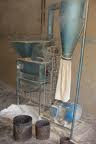
Most Kenyans grow their own maize, the main staple food in Kenya, and if it is not eaten green (i.e. fresh) or cooked wholegrain in githeri, they take it to the posho mill to be ground, so that the meal can be eaten as ugali.
Isabelle Prondzynski
:::::::::::::::::::::::::::::::::::::::::::::::::::::::::::::::::::::::::::::::::::::::::::::::::::::
Posho Mills in Kenya

In Kenya, both in the rural and urban areas, posho mills play an important role in economic life of Kenyans; they pulverize maize grain, which is the staple food of the country, into flour (unga). The flour is then used to prepare ugali or uji. Both are types of maize porridge -- ugali is tougher and firm, while uji has a soupy consistence.

Ugali is simple to prepare.
You just heat water to boiling point, then, using a cooking stick, add handful after handful of maize flour, stirring the mixture gently until it becomes firm. You then continue to heat it for some time more to make it firmer. It is best to keep turning the mixture in the sufuria (saucepan) to make sure it is well cooked before transferring it to a plate. It is then served hot with the various vegetables or stew according to one’s own taste.

David, a worker at the mill
Posho mills also grind other grain such as wheat and millet into flour. There are two types of posho mills: the electric posho mill and the diesel posho mill. The diesel posho mill is used in the remote and rural areas where there is no electricity. It has been in existence for a long time; in fact, it has been there since those days of the grinding mill. Before the diesel posho mill came into use, there was the grinding mill, which was operated manually by hand. It was very tedious as one had to turn the heavy wheel for some time.
Due to its laboriousness, it could produce only a little flour at a time, and the flour was coarse. Before the grinding mill came into existence, there was the grinding stone. This is the most traditional method of producing flour, still used by some of the most traditional communities in Kenya.
The grinding stone is simply a huge flat stone smoothened on the surface and the user uses a smaller stone to crush the grain between the two. The traditionalists argue that flour produced by the diesel and electric posho mills is contaminated with grease and oil hence not very not safe for human consumption. However, it is also argued that flour produced by the grinding mill contains minute stones, which come off the grinding stone surfaces due to friction. These minute stones are a health hazard as they may accumulate in the appendix and end up causing appendicitis.

The electric posho mill on the other hand is found in urban centres with electricity supplies. They are made and operate in the same way as the diesel posho mills, only that they use electric power. The flour produced by these posho mills is supposed to be safer, but it is still argued that the oil and grease used to lubricate the machine’s mobile joints sometimes finds its way into the flour. It is also debatable that the metal parts which wear out may end up in the flour, as there is no place provided where the micro metal pieces can collect.
All in all, posho mills are crucial to the lives of most Kenyans. In the evenings mostly, you will see a long queue of tins or polythene bags full of maize grain waiting to be ground. It is mostly women and children who take the grain to the posho mills for grinding, but sometimes, also men, especially the single ones working in towns, are seen in the queues.
When maize grain is cheap after bountiful rains, the majority of Kenyans save money by buying maize grain and taking it to the posho mill for grinding into flour, instead of going for the fine and sifted flour (sold mostly in 1 kg or 2 kg packs) in the shops and supermarkets. The full maize grain is measured in a standard tin of 2 kg. This tin, which is a reused cooking oil container, is referred to as korokoro. To grind a 2 kg tin of maize one is charged KShs. 10/-, while the maize in the same tin currently costs KShs. 50/-. The largest quantity of maize is the 90kg bag.
.................................................................................
WIMBI
wimbi means millet.
This posho mill grinds not only maize, but millet or wimbi as well. Wimbi is also called bulo, obulo or obule (Luhya).

Wimbi is one of the oldest grains to be grown by Kenyans, especially in Western and Nyanza. Wimbi has many domestic uses. One of them is the making of brown ugali or ugali ya wimbi as they call it. This type of ugali, is very special to the people of Western Kenya. It is eaten at all traditional ceremonies and rituals, the most remarkable one is being used during traditional weddings as a wedding cake.
The other use of wimbi is in the making of the traditional brew called busaa (Swahili) amalwa or kamalwa (Luhya). The millet used in this process goes through a special process which includes being kept under wet condition away from sunshine for a week, during which it produces white shoots. It is then spread out in the sun to dry up until it is brown. It is at this stage that is taken into the posho mill to be ground into flour, but this flour is not ordinary flour; it is called limela or limira, meaning yeast, and it is used to ferment the traditional brew called kamalwa. Busaa or kamalwa is a product of maize fermented maize flour fried and mixed with water and limela and allowed to ferment for three days.
Millet flour is also used in the making of brown porridge, traditionally known as buyu, obusera or busera (Luhya). The Luo call it nyuka. This is the most popular porridge in both rural and urban Kenya; you find it being sold even in big hotels, food kiosks, roadsides and even by hawkers.
To make the brown ugali even more delicious, the millet grain is usually mixed with pieces of cassava, which they call, kumwoko or omwoko (Huhoko: Swahili) and then taken into the posho mill for grinding. It makes a delicious meal when the brown ugali is eaten with meat and meat stew, chicken and chicken stew or fish and fish stew.
Text and Photos : Patrick Wafula
:::::::::::::::::::::::::::::::::::::::::::::::::::::::::::::::::::::::::::::::::::::::::::::::::::::
Millet and sorghum are native crops in Kenya and prized for their drought resistant qualities.
In recent years, they have both been largely replaced by maize in Kenyan agriculture and in the Kenyan diet. One reason for this is that millet takes a whole year to mature, while maize yields two crops in the course of a year. Millet is also very attractive to birds and has to be protected from them while ripening, which makes it a more expensive crop to produce.
They have a long history in Kenya and are still prized as oodstuffs on the important occasions in people's lives.
Millet porridge (uji) is much appreciated and health giving and is the regular breakfast in parts of the country. It is also easily transportable in thermos flasks and can therefore provide good sustenance to farmers as they go about their daily work.
A particular type of millet (tef) grows only in Ethiopia and is essential for making injera, the Ethiopian staple carbohydrate.
Outside Ethiopia, the tef can be replaced with rice flour, which makes a decent enough injera for those who cannot obtain the real thing.
Isabelle Prondzynski
The swahili name for sorghum is mtama.
*****************************
Worldwide use
. Millet (hie, awa, kibi) Japan
*****************************
Things found on the way
*****************************
HAIKU
hot evening--
chicks pecking maize grains
in the posho mill
Alex Mwanambisi
:::::::::::::::::::::::::::::::::::::::::::::::::::::::::::::::::::::::::::::::::::::::::::::::::::::
power failure -
a posho-miller leans
on the engine
James Bundi
:::::::::::::::::::::::::::::::::::::::::::::::::::::::::::::::::::::::::::::::::::::::::::::::::::::
posho mill --
a dove pecks crunched maize
under the sieve
Isaac Ndirangu
April 2011
*****************************
Related words
***** Sufuria .. cooking pot or saucepan
***** Maize, Corn and githeri
***** Green Maize
. . . ugali
:::::::::::::::::::::::::::::::::::::::::::::::::::::::::::::::::::::::::::::::::::::::::::::::::::::
:::::::::::::::::::::::::::::::::::::::::::::::::::::::::::::::::::::::::::::::::::::::::::::::::::::
Posho mill
***** Location: Kenya
***** Season: Topic
***** Category: Humanity
*****************************
Explanation
This is a mill that grinds your wheat or maize into flour.
Most Kenyans grow their own maize, the main staple food in Kenya, and if it is not eaten green (i.e. fresh) or cooked wholegrain in githeri, they take it to the posho mill to be ground, so that the meal can be eaten as ugali.
Isabelle Prondzynski
:::::::::::::::::::::::::::::::::::::::::::::::::::::::::::::::::::::::::::::::::::::::::::::::::::::
Posho Mills in Kenya
In Kenya, both in the rural and urban areas, posho mills play an important role in economic life of Kenyans; they pulverize maize grain, which is the staple food of the country, into flour (unga). The flour is then used to prepare ugali or uji. Both are types of maize porridge -- ugali is tougher and firm, while uji has a soupy consistence.
Ugali is simple to prepare.
You just heat water to boiling point, then, using a cooking stick, add handful after handful of maize flour, stirring the mixture gently until it becomes firm. You then continue to heat it for some time more to make it firmer. It is best to keep turning the mixture in the sufuria (saucepan) to make sure it is well cooked before transferring it to a plate. It is then served hot with the various vegetables or stew according to one’s own taste.
David, a worker at the mill
Posho mills also grind other grain such as wheat and millet into flour. There are two types of posho mills: the electric posho mill and the diesel posho mill. The diesel posho mill is used in the remote and rural areas where there is no electricity. It has been in existence for a long time; in fact, it has been there since those days of the grinding mill. Before the diesel posho mill came into use, there was the grinding mill, which was operated manually by hand. It was very tedious as one had to turn the heavy wheel for some time.
Due to its laboriousness, it could produce only a little flour at a time, and the flour was coarse. Before the grinding mill came into existence, there was the grinding stone. This is the most traditional method of producing flour, still used by some of the most traditional communities in Kenya.
The grinding stone is simply a huge flat stone smoothened on the surface and the user uses a smaller stone to crush the grain between the two. The traditionalists argue that flour produced by the diesel and electric posho mills is contaminated with grease and oil hence not very not safe for human consumption. However, it is also argued that flour produced by the grinding mill contains minute stones, which come off the grinding stone surfaces due to friction. These minute stones are a health hazard as they may accumulate in the appendix and end up causing appendicitis.
The electric posho mill on the other hand is found in urban centres with electricity supplies. They are made and operate in the same way as the diesel posho mills, only that they use electric power. The flour produced by these posho mills is supposed to be safer, but it is still argued that the oil and grease used to lubricate the machine’s mobile joints sometimes finds its way into the flour. It is also debatable that the metal parts which wear out may end up in the flour, as there is no place provided where the micro metal pieces can collect.
All in all, posho mills are crucial to the lives of most Kenyans. In the evenings mostly, you will see a long queue of tins or polythene bags full of maize grain waiting to be ground. It is mostly women and children who take the grain to the posho mills for grinding, but sometimes, also men, especially the single ones working in towns, are seen in the queues.
When maize grain is cheap after bountiful rains, the majority of Kenyans save money by buying maize grain and taking it to the posho mill for grinding into flour, instead of going for the fine and sifted flour (sold mostly in 1 kg or 2 kg packs) in the shops and supermarkets. The full maize grain is measured in a standard tin of 2 kg. This tin, which is a reused cooking oil container, is referred to as korokoro. To grind a 2 kg tin of maize one is charged KShs. 10/-, while the maize in the same tin currently costs KShs. 50/-. The largest quantity of maize is the 90kg bag.
.................................................................................
WIMBI
wimbi means millet.
This posho mill grinds not only maize, but millet or wimbi as well. Wimbi is also called bulo, obulo or obule (Luhya).
Wimbi is one of the oldest grains to be grown by Kenyans, especially in Western and Nyanza. Wimbi has many domestic uses. One of them is the making of brown ugali or ugali ya wimbi as they call it. This type of ugali, is very special to the people of Western Kenya. It is eaten at all traditional ceremonies and rituals, the most remarkable one is being used during traditional weddings as a wedding cake.
The other use of wimbi is in the making of the traditional brew called busaa (Swahili) amalwa or kamalwa (Luhya). The millet used in this process goes through a special process which includes being kept under wet condition away from sunshine for a week, during which it produces white shoots. It is then spread out in the sun to dry up until it is brown. It is at this stage that is taken into the posho mill to be ground into flour, but this flour is not ordinary flour; it is called limela or limira, meaning yeast, and it is used to ferment the traditional brew called kamalwa. Busaa or kamalwa is a product of maize fermented maize flour fried and mixed with water and limela and allowed to ferment for three days.
Millet flour is also used in the making of brown porridge, traditionally known as buyu, obusera or busera (Luhya). The Luo call it nyuka. This is the most popular porridge in both rural and urban Kenya; you find it being sold even in big hotels, food kiosks, roadsides and even by hawkers.
To make the brown ugali even more delicious, the millet grain is usually mixed with pieces of cassava, which they call, kumwoko or omwoko (Huhoko: Swahili) and then taken into the posho mill for grinding. It makes a delicious meal when the brown ugali is eaten with meat and meat stew, chicken and chicken stew or fish and fish stew.
Text and Photos : Patrick Wafula
:::::::::::::::::::::::::::::::::::::::::::::::::::::::::::::::::::::::::::::::::::::::::::::::::::::
Millet and sorghum are native crops in Kenya and prized for their drought resistant qualities.
In recent years, they have both been largely replaced by maize in Kenyan agriculture and in the Kenyan diet. One reason for this is that millet takes a whole year to mature, while maize yields two crops in the course of a year. Millet is also very attractive to birds and has to be protected from them while ripening, which makes it a more expensive crop to produce.
They have a long history in Kenya and are still prized as oodstuffs on the important occasions in people's lives.
Millet porridge (uji) is much appreciated and health giving and is the regular breakfast in parts of the country. It is also easily transportable in thermos flasks and can therefore provide good sustenance to farmers as they go about their daily work.
A particular type of millet (tef) grows only in Ethiopia and is essential for making injera, the Ethiopian staple carbohydrate.
Outside Ethiopia, the tef can be replaced with rice flour, which makes a decent enough injera for those who cannot obtain the real thing.
Isabelle Prondzynski
The swahili name for sorghum is mtama.
*****************************
Worldwide use
. Millet (hie, awa, kibi) Japan
*****************************
Things found on the way
*****************************
HAIKU
hot evening--
chicks pecking maize grains
in the posho mill
Alex Mwanambisi
:::::::::::::::::::::::::::::::::::::::::::::::::::::::::::::::::::::::::::::::::::::::::::::::::::::
power failure -
a posho-miller leans
on the engine
James Bundi
:::::::::::::::::::::::::::::::::::::::::::::::::::::::::::::::::::::::::::::::::::::::::::::::::::::
posho mill --
a dove pecks crunched maize
under the sieve
Isaac Ndirangu
April 2011
*****************************
Related words
***** Sufuria .. cooking pot or saucepan
***** Maize, Corn and githeri
***** Green Maize
. . . ugali
:::::::::::::::::::::::::::::::::::::::::::::::::::::::::::::::::::::::::::::::::::::::::::::::::::::
7/11/2010
Marikiti Market
[ . BACK to WORLDKIGO TOP . ]
:::::::::::::::::::::::::::::::::::::::::::::::::::::::::::::::::::::::::::::::::::::::::::::::::::::
Marikiti Market
***** Location: Nairobi, Kenya
***** Season: Topic
***** Category: Humanity
*****************************
Explanation
Wakulima Market (Farmers' Market),
usually abbreviated to Marikiti,
is situated on Haile Selassie Avenue, right next to Muthurwa Matatu Terminus and close to the Machakos Country Bus Station.
It is Nairobi's main wholesale market for fruit and vegetables -- these are delivered round the clock from all over the country, indeed even neighbouring countries. Before dawn, retail traders and the owners of small stalls around the city arrive in Marikiti to buy their provisions for the day and take them back so as to be able to sell from opening time. There is great competition for the freshest, the tastiest and the cheapest produce, and most of the small stallholders have developed a keen eye for what is best to buy.
There is a huge business of mikokoteni (plural of mkokoteni, a hand cart) around Wakulima Market, as most stall holders do not possess a vehicle, yet regularly buy quite substantial volumes and weights. The hand carts are driven by young men (usually just one, but sometimes several if the weight is great) and produce is delivered all over the city, often many kilometres away. Mikokoteni, though walked by their operators, are regarded as part of the road traffic of Nairobi, and both car and matatu drivers will do their best to overtake them without causing harm or injury.
The pavements around Marikiti are occupied by sellers of tiny quantities of fruit and vegetables to the passing pedestrians, who thus also benefit from the attractive prices of the wholesale market.
Isabelle Prondzynski

© PHOTO : JacKE1, FLICKR
MORE
. Mkokoteni Haiku .
Reference : wikimapia.org, Marikiti wholesale market MAP
:::::::::::::::::::::::::::::::::::::::::::::::::::::::::::::::::::::::::::::::::::::::::::::::::::::

Busy mkokoteni
The weight of the load was so heavy that he had to spend most energy on pushing down the bar in front of him, as well as pulling the load itself.

Following a mkokoteni on Jogoo Road
© PHOTOS : Isabelle Prondzynski, FLICKR
*****************************
Worldwide use
*****************************
Things found on the way
*****************************
HAIKU
Irish potatoes
peeping from an overstuffed sack --
a sweating cart man
It is one of the specialities of wholesale fruit and vegetable markets in Kenya to present the produce, particularly potatoes, in overstuffed sacks. Where the sack as such ends, more potatoes are added to form a pile, and the whole is then closed by a network of sisal string, so that the customer can see the contents without having to cut open the bag. This arrangement also shows the generosity of the producer -- filling as much as possible into the sack, to add value.
In Kenya, we have two basic types of potatoes --
Irish potatoes (Swahili : viazi, called potatoes in Europe), and
sweet potatoes (Kikuyu : ngwacî).
Both are popular in parts of the country and belong to Kenya's staple foods.
Marikiti market --
the porter ahead of me
smelling of onions
squashed
avocados and pawpaws --
Marikiti market gate
main gate--
mikokoteni and trucks compete
for entry and exit
my shoe slides
on a shell of a water melon--
Wakulima Market
sweltering noon--
tired cart men take a nap
in their mikokoteni
a hurrying woman
slides on an orange peel and falls--
milling crowds
loaded lorries
queue to offload farm produce--
falling dry and green fronds
Patrick Wafula, July 2010
:::::::::::::::::::::::::::::::::::::::::::::::::::::::::::::::::::::::::::::::::::::::::::::::::::::
I respect the energetic men in this market whose work is to carry sacks and other luggage for short distances. They use nothing but their back to carry the heavy sacks to a point where they have to walk while their back is bended almost at 90 degrees! You would think that the sacks have legs because you cannot see them and they cannot see what is in front of them, all they can manage is to whistle for you to give them way.
whistles
under potato sacks--
Marikiti Market
Caleb Mutua
*****************************
Related words
***** Pawpaw (Asimina) almost like a kind of papaya
***** . Mkokoteni hand cart .
:::::::::::::::::::::::::::::::::::::::::::::::::::::::::::::::::::::::::::::::::::::::::::::::::::::
:::::::::::::::::::::::::::::::::::::::::::::::::::::::::::::::::::::::::::::::::::::::::::::::::::::
Marikiti Market
***** Location: Nairobi, Kenya
***** Season: Topic
***** Category: Humanity
*****************************
Explanation
Wakulima Market (Farmers' Market),
usually abbreviated to Marikiti,
is situated on Haile Selassie Avenue, right next to Muthurwa Matatu Terminus and close to the Machakos Country Bus Station.
It is Nairobi's main wholesale market for fruit and vegetables -- these are delivered round the clock from all over the country, indeed even neighbouring countries. Before dawn, retail traders and the owners of small stalls around the city arrive in Marikiti to buy their provisions for the day and take them back so as to be able to sell from opening time. There is great competition for the freshest, the tastiest and the cheapest produce, and most of the small stallholders have developed a keen eye for what is best to buy.
There is a huge business of mikokoteni (plural of mkokoteni, a hand cart) around Wakulima Market, as most stall holders do not possess a vehicle, yet regularly buy quite substantial volumes and weights. The hand carts are driven by young men (usually just one, but sometimes several if the weight is great) and produce is delivered all over the city, often many kilometres away. Mikokoteni, though walked by their operators, are regarded as part of the road traffic of Nairobi, and both car and matatu drivers will do their best to overtake them without causing harm or injury.
The pavements around Marikiti are occupied by sellers of tiny quantities of fruit and vegetables to the passing pedestrians, who thus also benefit from the attractive prices of the wholesale market.
Isabelle Prondzynski
© PHOTO : JacKE1, FLICKR
MORE
. Mkokoteni Haiku .
Reference : wikimapia.org, Marikiti wholesale market MAP
:::::::::::::::::::::::::::::::::::::::::::::::::::::::::::::::::::::::::::::::::::::::::::::::::::::
Busy mkokoteni
The weight of the load was so heavy that he had to spend most energy on pushing down the bar in front of him, as well as pulling the load itself.
Following a mkokoteni on Jogoo Road
© PHOTOS : Isabelle Prondzynski, FLICKR
*****************************
Worldwide use
*****************************
Things found on the way
*****************************
HAIKU
Irish potatoes
peeping from an overstuffed sack --
a sweating cart man
It is one of the specialities of wholesale fruit and vegetable markets in Kenya to present the produce, particularly potatoes, in overstuffed sacks. Where the sack as such ends, more potatoes are added to form a pile, and the whole is then closed by a network of sisal string, so that the customer can see the contents without having to cut open the bag. This arrangement also shows the generosity of the producer -- filling as much as possible into the sack, to add value.
In Kenya, we have two basic types of potatoes --
Irish potatoes (Swahili : viazi, called potatoes in Europe), and
sweet potatoes (Kikuyu : ngwacî).
Both are popular in parts of the country and belong to Kenya's staple foods.
Marikiti market --
the porter ahead of me
smelling of onions
squashed
avocados and pawpaws --
Marikiti market gate
main gate--
mikokoteni and trucks compete
for entry and exit
my shoe slides
on a shell of a water melon--
Wakulima Market
sweltering noon--
tired cart men take a nap
in their mikokoteni
a hurrying woman
slides on an orange peel and falls--
milling crowds
loaded lorries
queue to offload farm produce--
falling dry and green fronds
Patrick Wafula, July 2010
:::::::::::::::::::::::::::::::::::::::::::::::::::::::::::::::::::::::::::::::::::::::::::::::::::::
I respect the energetic men in this market whose work is to carry sacks and other luggage for short distances. They use nothing but their back to carry the heavy sacks to a point where they have to walk while their back is bended almost at 90 degrees! You would think that the sacks have legs because you cannot see them and they cannot see what is in front of them, all they can manage is to whistle for you to give them way.
whistles
under potato sacks--
Marikiti Market
Caleb Mutua
*****************************
Related words
***** Pawpaw (Asimina) almost like a kind of papaya
***** . Mkokoteni hand cart .
:::::::::::::::::::::::::::::::::::::::::::::::::::::::::::::::::::::::::::::::::::::::::::::::::::::
7/05/2010
Beanie cap
[ . BACK to WORLDKIGO TOP . ]
:::::::::::::::::::::::::::::::::::::::::::::::::::::::::::::::::::::::::::::::::::::::::::::::::::::
Beanie cap, beanie hat, mavin
***** Location: Kenya
***** Season: Cool dry season
***** Category: Humanity
*****************************
Explanation
A beanie is a type of cap that is put for warmth.
It completely covers your head except for the face. The children here are allowed to put on beanies, especially in nursery school, during these cold seasons. children beanies are of different colours, mostly red and green. Some have two dangling balls attached with a strings on top of the cap, that bounce when the kids walk or run.
I also see adults wearing beanies, mostly the hard working men and women who wake up very early in the morning to go to Marigiti (One of the biggest grocery markets in the city center, Next to Muthurwa Hawkers Market), and more recently, I have seen a number of BODA BODA drivers are wearing them, especially those who dont have helmets or before putting on the protective helmet. Even the ears are covered so you feel warm enough.
Caleb Mutua
:::::::::::::::::::::::::::::::::::::::::::::::::::::::::::::::::::::::::::::::::::::::::::::::::::::

. . . CLICK here for another great photo !
*****************************
Worldwide use
*****************************
Things found on the way

beanie with Ninja Turtles
*****************************
HAIKU
June cold--
two kids run to school
with a beanie each
Caleb Mutua, June 2010
:::::::::::::::::::::::::::::::::::::::::::::::::::::::::::::::::::::::::::::::::::::::::::::::::::::
a beanie left
on the clothesline --
rainy noon
Catherine Njeri
:::::::::::::::::::::::::::::::::::::::::::::::::::::::::::::::::::::::::::::::::::::::::::::::::::::
shivering --
my sister is wearing
her torn beanie
Lucy Mukuhi
hot morning --
my brother struggling to remove
his beanie
Stephen Macharia
:::::::::::::::::::::::::::::::::::::::::::::::::::::::::::::::::::::::::::::::::::::::::::::::::::::
BEANIES AND MAVENS
I have observed lot of children and even adults with them and there is an increased use by the motorcycle riders.
marble game--
an assorted colour beanie
on his head
shivering--
the boy pulls his maven
to cover the ears
James Bundi
*****************************
Related words
***** WKD : Reference
:::::::::::::::::::::::::::::::::::::::::::::::::::::::::::::::::::::::::::::::::::::::::::::::::::::
:::::::::::::::::::::::::::::::::::::::::::::::::::::::::::::::::::::::::::::::::::::::::::::::::::::
Beanie cap, beanie hat, mavin
***** Location: Kenya
***** Season: Cool dry season
***** Category: Humanity
*****************************
Explanation
A beanie is a type of cap that is put for warmth.
It completely covers your head except for the face. The children here are allowed to put on beanies, especially in nursery school, during these cold seasons. children beanies are of different colours, mostly red and green. Some have two dangling balls attached with a strings on top of the cap, that bounce when the kids walk or run.
I also see adults wearing beanies, mostly the hard working men and women who wake up very early in the morning to go to Marigiti (One of the biggest grocery markets in the city center, Next to Muthurwa Hawkers Market), and more recently, I have seen a number of BODA BODA drivers are wearing them, especially those who dont have helmets or before putting on the protective helmet. Even the ears are covered so you feel warm enough.
Caleb Mutua
:::::::::::::::::::::::::::::::::::::::::::::::::::::::::::::::::::::::::::::::::::::::::::::::::::::
. . . CLICK here for another great photo !
*****************************
Worldwide use
*****************************
Things found on the way

beanie with Ninja Turtles
*****************************
HAIKU
June cold--
two kids run to school
with a beanie each
Caleb Mutua, June 2010
:::::::::::::::::::::::::::::::::::::::::::::::::::::::::::::::::::::::::::::::::::::::::::::::::::::
a beanie left
on the clothesline --
rainy noon
Catherine Njeri
:::::::::::::::::::::::::::::::::::::::::::::::::::::::::::::::::::::::::::::::::::::::::::::::::::::
shivering --
my sister is wearing
her torn beanie
Lucy Mukuhi
hot morning --
my brother struggling to remove
his beanie
Stephen Macharia
:::::::::::::::::::::::::::::::::::::::::::::::::::::::::::::::::::::::::::::::::::::::::::::::::::::
BEANIES AND MAVENS
I have observed lot of children and even adults with them and there is an increased use by the motorcycle riders.
marble game--
an assorted colour beanie
on his head
shivering--
the boy pulls his maven
to cover the ears
James Bundi
*****************************
Related words
***** WKD : Reference
:::::::::::::::::::::::::::::::::::::::::::::::::::::::::::::::::::::::::::::::::::::::::::::::::::::
Subscribe to:
Comments (Atom)


 Posts
Posts


